Order Name: Hymenoptera (“god of marriage”)
Genus species: Apis mellifera
Common Name: Honeybee
Colony consists of one honeybee queen, worker bees, larvae, male bees (drones), and sterile female bees. The honeybee queen produces about 1,500 eggs per day and they produce pheromones passed by trophylaxis. Worker bees have different tasks depending on the age of the worker bee. For the first two weeks, worker bees stay in the hive/colony, tend to the queen, larvae, and the nest. After those two weeks, they start to forage like the other honeybees do. Mated males (drones) die and the rest are evicted in late fall. Honeybee larvae have chewing mouth parts, legless, and are grub-like. They heavily depend on worker bees to bring them food.
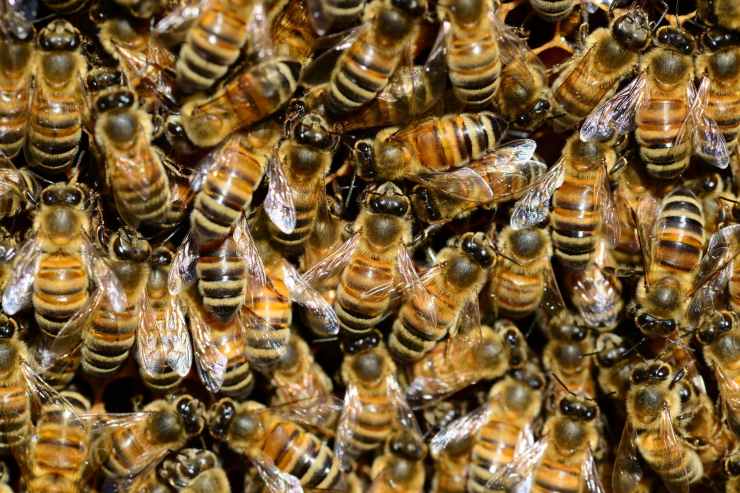
The color of the honeybee ranges from light brown, golden yellow and brown wings, or black. Honeybees are about 15 mm long. Their bodies are segmented by: stinger, legs, antennae, three segments of thorax (pro-, meso-, and meta-), and have six visible segments of the abdomen that is narrow at the attachment of the thorax.
Honeybees are union winged aka “god of marriage” because both the hind and front wings are joined together. The hind and front wings are basically joined by a series of hooks.
 Honi the Honeybee